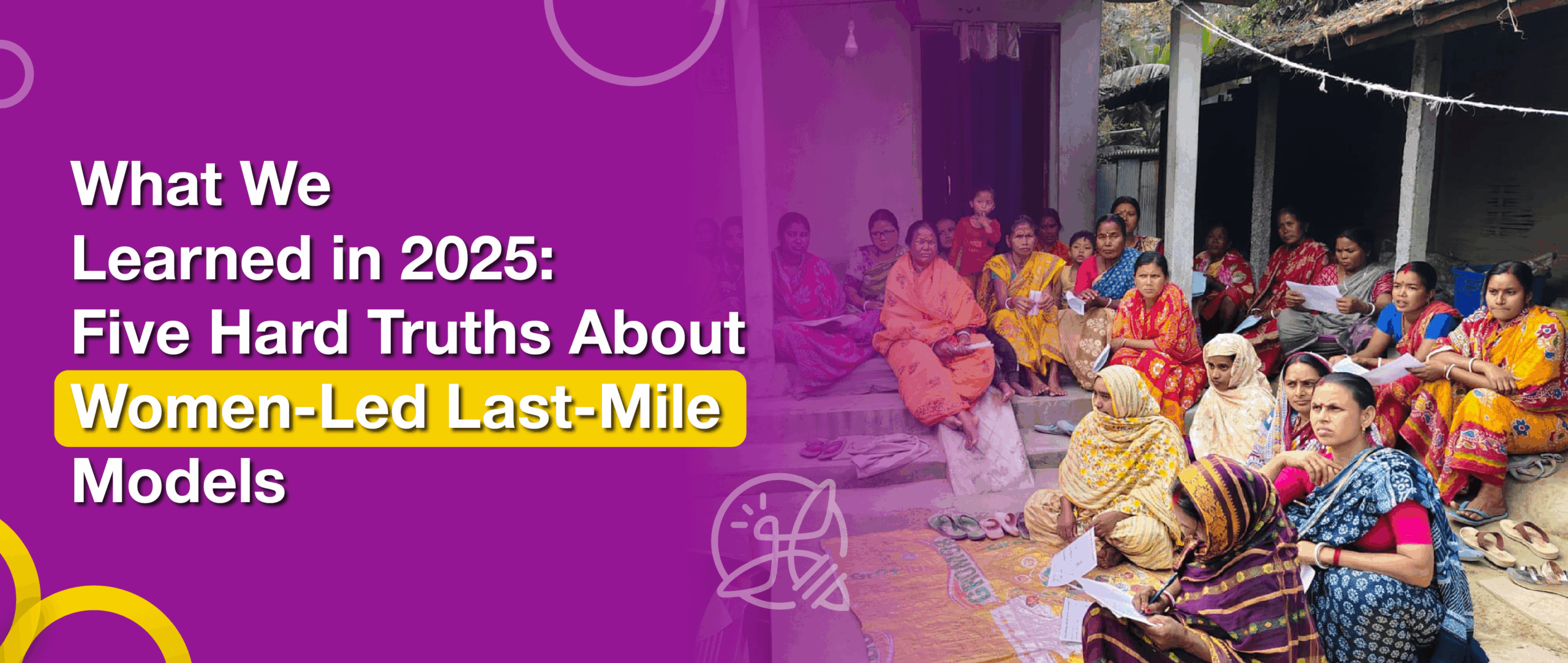
Impact assessments are most helpful when they question what we think we know, not just confirm it. In 2025, we learned some hard truths that were sometimes uncomfortable, but we needed to build lasting models.
1. Not all women will become entrepreneurs, and that’s okay.
Not everyone who joins is a good fit for entrepreneurship. Some women try it for a short time and leave because of other priorities or not enough support. Accepting this helps us focus resources where entrepreneurship can really work, without seeing leaving as a failure.
2. Retention matters more than reach.
Big networks matter little if people are not really involved. What matters more is keeping women engaged, helping them grow, and making sure their income is steady.
3. Income is uneven, but predictable.
Earnings are different for everyone, but there are clear patterns. Women who have more time, better access, and stronger skills do better. Knowing this helps us target support more effectively.
4. Digital access remains a binding constraint.
If women lack reliable smartphones or digital skills, they are left out of systems meant to help them. We have been running programs that allow women to earn smartphones through incentives to bridge the access gap. We are also focusing on digital literacy training to help them build their digital skills and grow their incomes.
Evidence must change strategy, not just reporting.
Data only matters if it leads to better decisions. Over the years and in 2025, what we learned changed how we engage, train, and explore new ways to support livelihoods. For example, we rigorously ran the peer-learning program that matches experienced entrepreneurs with newcomers. We did this because the data showed that women with peer support stay involved longer and have steadier incomes. This change demonstrates our commitment to using data to keep improving.
These truths do not weaken the case for women-led last-mile models. Instead, they make it stronger by keeping our goals realistic.
Lasting impact comes from organisations that are open about what they learn, keep adapting, and stay honest about what is needed. This is the work we have ahead of us.
In the final piece, we bring this thinking together with evidence from the ground.